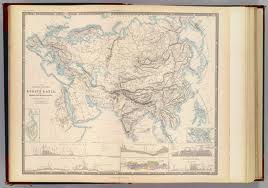
Europe is a continent forming the westernmost part of the Eurasian super continent. Europe is bounded to the north by the Arctic Ocean, to the west by the Atlantic Ocean, to the south by the Mediterranean Sea and the Black Sea, and to the east by the Ural Mountains and the Caspian Sea (for more detailed description see Geography of Europe.
In terms of area, Europe is the world's second smallest continent, with an area of 10,400,000 kmB2 (4,000,000 square miles), making it slightly larger than Australia.In terms of population it is the third largest continent after Asia and Africa. The population of Europe in 2001 was estimated to be 666,498,000: roughly one ninth of the world's population.
A History of Archaeological Thought, Archaeological Theory in Europe
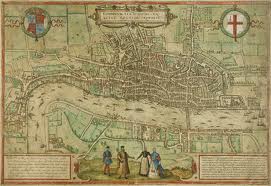
The theory and practice of archaeology in Europe changed rapidly in the years after 1950. The first focus of attention was on historic cities, such as Winchester, but it was soon realized that other projects, such as roads, railways, and pipelines, or mineral extraction, as well as industrialized agricultural operations, had a similarly destructive effect.
The growth of Environmental Archaeology has not only permitted a better understanding of the interaction between humans and their environment, but, with the development of new techniques for the recovery of items such as insect and parasite remains, has also given a new insight into living conditions, especially in towns.
More important than all the changes in the nature and scale of archaeological research were changes in the theoretical approach to the understanding of the past. In the early 1950s, a culture-historical approach was firmly established throughout much of Europe.
In ancient Greek mythology, Europa was a Phoenician princess who was abducted by a bull-shaped Zeus and taken to the island of Crete, where she gave birth to Minos. For Homer, Europa (Greek: ????p?) was a mythological queen of Crete, not a geographical designation. Later Europa stood for mainland Greece and by 500 BC its meaning was extended to lands to the north.
The term Europe is generally derived from Greek words meaning broad (eurys) and face (ops). A minority, however, see a Semitic origin, pointing to the Semitic word ereb which means "sunset". From a Middle Eastern viewpoint, the sun sets over Europe: the lands to the west.
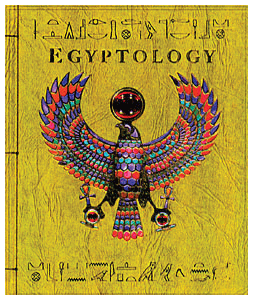
MODERN EGYPTOLOGY
The invasion of Egypt by Napoleon Bonaparte is paved the way to the beginning of Egyptology's modern history . Between the year 1809 and 1829 of immediate publication of Description de l'Égypte made numerous ancient Egyptian source materials brought to Europeans for the first time.[10] The some of the first Egyptologists of wide acclaim were Jean-François Champollion, Thomas Young and Ippolito Rosellini. The German Karl Richard Lepsius; made the early participant in the investigations of Egypt in the exploration of mapping, excavating, and recording several sites. For the first time, Champollion announced his general decipherment i.,e.decryping the Egyptian ancient script, known as hieroglyphics which is actually a Logographic scripts, making use of the Rosetta Stone as his primary aid. The very important development of Egyptology was the Stone's decipherment , With subsequently ever-increasing knowledge of Egyptian writing and language, the study of Ancient Egyptian civilization was able to proceed with greater academic rigour and with all the added impetus that comprehension of the written sources was able to engender. Among all others,from the work of William Matthew Flinders Petrie Egyptology became more professional . Petrie introduced techniques of field preservation, recording, and excavating. Howard Carter's expedition brought much acclaim to the field of Egyptology.Now, even many of amateurs who are highly educated also travelled to Egypt, however, including women such as Harriet Martineau and Florence Nightingale, who both left philosophical accounts of their travels, which revealed learned familiarity with all the latest European Egyptology.
Europe has a long history of cultural and economic achievement, starting as far back as the paleolithic. Origins of Western democratic and individualistic culture are often laid in Ancient Greece; the Roman Empire divided the continent along the Rhine and Danube for several centuries.
Following the decline of the Roman Empire, Europe entered a long period of stasis, referred to by Renaissance thinkers as the "Dark Ages" and by the Enlightenment and modern historians, as the Middle Ages. During this time isolated monastic communities in Ireland and elsewhere carefully safeguarded and compiled knowledge accumulated previously.
The Renaissance and the New Monarchs marked the start of a period of discovery, exploration, and increase in scientific knowledge. From the 15th century Portugal opened the age of discoveries soon followed by Spain. They were later joined by France, Belgium, the Netherlands and Britain, in building large colonial empires, with vast holdings in Africa, the Americas, and Asia.
The Industrial Revolution started in England in the later 18th century, leading to much greater general prosperity and a corresponding increase in population. Many of the states in Europe took their present form in the aftermath of World War I. After World War II, and until the end of the Cold War, Europe was divided into two major political and economic blocks: Communist nations in Eastern Europe and capitalistic countries in Western Europe. Around 1990 the Eastern bloc broke up.
In terms of shape, Europe is a collection of connected peninsulas. The two largest of these are "mainland" Europe and Scandinavia to the north, divided from each other by the Baltic Sea. Three smaller peninsulas-Iberia, Italy and the Balkans-emerge from the southern margin of the mainland into the Mediterranean Sea, which separates Europe from Africa. Eastward, mainland Europe widens much like the mouth of a funnel, until the boundary with Asia is reached at the Ural Mountains.
Land relief in Europe shows great variation within relatively small areas. The southern regions, however, are more mountainous, while moving north the terrain descends from the high Alps, Pyrenees and Carpathian's, through hilly uplands, into broad, low northern plains, which are vast in the east. An arc of uplands also exists along the northwestern seaboard, beginning in the western British Isles and continuing along the mountainous, fjord-cut spine of Norway.
This description is simplified. Sub-regions such as Iberia and Italy contain their own complex features, as does mainland Europe itself, where the relief contains many plateaus, river valleys and basins that complicate the general trend. Iceland and the British Isles are special cases. The former is a land unto itself in the northern ocean which is counted as part of Europe, while the latter are upland areas that were once joined to the mainland until rising sea levels cut them off.
The few generalizations that can be made about the relief of Europe make it less than surprising that the continent's many separate regions provided homes for many separate nations throughout history.
He conducted archaeological research in Veroia, Naousa, Kilkis, Chalkidiki and ...
Books on the European Archaeology:
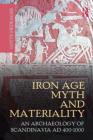
Iron Age Myth and Materiality - An Archaeology of Scandinavia AD 400-1000
Iron Age Myth and Materiality: an Archaeology of Scandinavia AD 400-1000 considers the relationship between myth and materiality in Scandinavia from the beginning of the post-Roman era and the European Migrations up until the coming of Christianity.
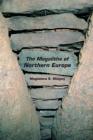
The Megaliths of Northern Europe
The North European megaliths are among the most enduring structures built in prehistory; they are imbued with symbolic meanings which embody physical and conceptual ideas about the nature of the world inhabited by the first Northern farmers.
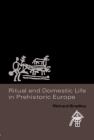
Ritual and Domestic Life in Prehistoric Europe
This fascinating study explores how our prehistoric ancestors developed rituals from everyday life and domestic activities. Richard Bradley contends that for much of the prehistoric period, ritual was not a distinct sphere of activity.
Rich Resources over the web on European Archaeology
European Association of Archaeologists :
The EAA is a membership-based association open to all archaeologists and other related or interested individuals or bodies. The EAA currently has over 1100 members on its database from 41 countries world-wide working in prehistory, classical, medieval and later archaeology.
Archaeology Digs in Europe : Numerous archaeology digs, field schools and other planned excavations are held each year throughout the countries in Europe.
Diciplines by Regional study
African ArchaeologyAfrica has the longest record of human activity of any part of the world and along with its geographical extent; it contains an enormous archaeological resource. Scholars have studied Egyptology for centuries but archaeologists have only paid serious attention to the rest of the continent in more recent times.
American ArchaeologyArchaeology of the Americas is the learning of the archaeology of North America, Central America (or Mesoamerica), South America and the Caribbean, which is to say, the pre-history and Pre-Columbian history of Native American peoples.
European ArchaeologyIn terms of area, Europe is the world's second smallest continent, with an area of 10,400,000 km² (4,000,000 square miles), making it slightly larger than Australia.
Medival archaeologyThe period covers the commotion caused by the fall of the Medival archaeology Roman Empire and cultures such as the Vikings, Saxons and Franks.
Near Eastern ArchaeologyNear Eastern Archaeology is a wide generalised application, and is divided into further regional sub-branches, the archaeology of modern states in the region or along broad thematic lines.
Post Medieval ArchaeologyThe Post Medieval Archaeology is considered as a bi-annual journal study of the material evidence of European society. This period saw the conversion of medieval to industrial society.
Modern ArchaeologyIn contrast to the antiquarianism of classical archaeology, anthropological archaeology today is concerned with culture history (i.e., the chronology of events and cultural traditions) and the explanation of cultural processes.